
CNC Polystyrene Milling Explained: Precision Shapes for Complex Projects
Some polystyrene components need more than a simple profile cut. When a design includes compound curves, detailed features or complex 3D geometry, CNC polystyrene milling gives you the control to turn that design into a precise, repeatable component.
This is especially useful for projects where accuracy and detail matter as much as the material itself.

What is CNC polystyrene milling?
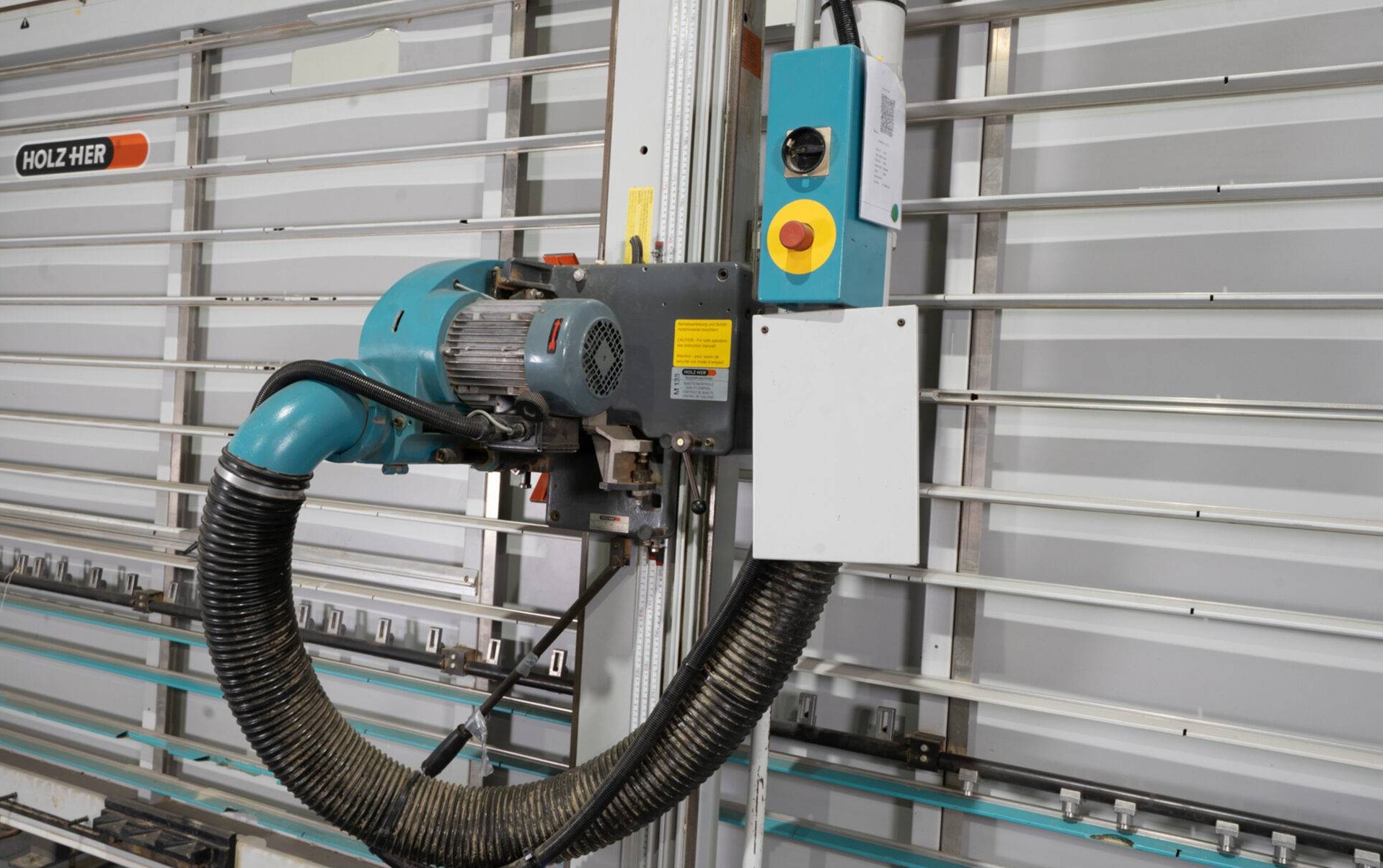
CNC polystyrene milling uses a computer-controlled cutting head to physically machine a polystyrene block or sheet into the required shape.
The cutting process is guided by digital design information, such as a CAD file or technical drawing, allowing the machine to follow the specified geometry and create detailed features within the material.
Unlike hot wire cutting, which uses a heated wire to follow a profile through the foam, CNC milling physically removes material. This allows the cutting head to work into the material instead of following its outer profile.
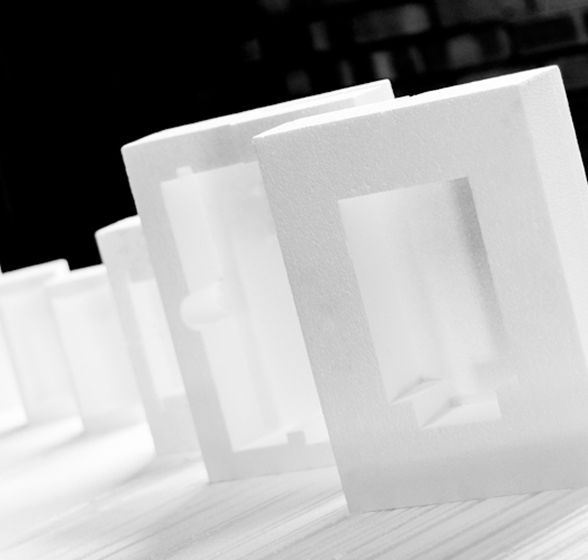
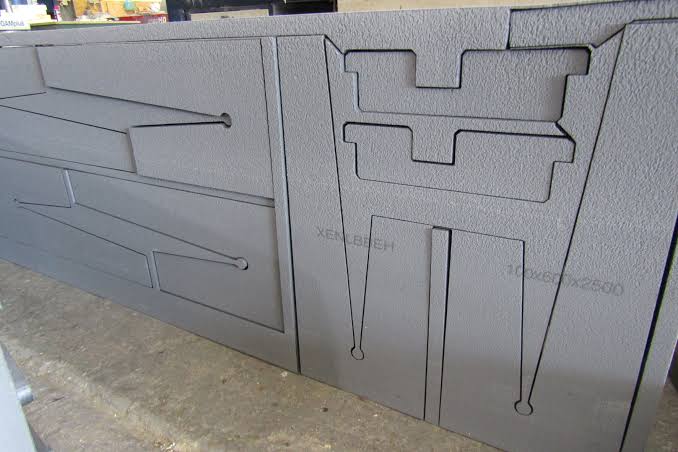
It can be used to produce complex sculptural forms, compound curves and detailed features such as pockets, channels, rebates and cut-outs.
Perudo provides CNC routing and cutting services across a wide range of block, slab and sheet materials, including polystyrene.
CNC polystyrene milling vs hot wire cutting
Hot wire cutting and CNC milling are both valuable processes, but they solve different manufacturing problems.
Hot wire cutting is particularly effective when you need clean, repeatable profiles in EPS or XPS, as the heated wire follows a 2D linear profile through the material. This makes it an efficient choice for simpler shapes and production runs where consistency is important.
CNC milling is more appropriate when the design requires additional detail or complexity. It can create full 3D shapes, as well as features and geometry that would not be possible through a simple wire-cut profile.
The choice comes down to the shape, material and level of detail required, rather than one process being inherently “better” than the other.
For a fuller comparison, read Hot Wire Cutting vs CNC Routing: Which Process Is Right for Your Project.
What can CNC polystyrene milling achieve?
Complex 3D forms
One of the main advantages of CNC milling is the ability to produce complex three-dimensional shapes. Compound curves, sculptural forms and other non-linear geometries can be taken directly from the digital design and machined into the material.
This gives designers greater freedom when developing larger or more intricate polystyrene components.
Tight and repeatable tolerances
Where components need to fit into another part of an assembly or production process, accuracy becomes particularly important.
Because CNC-controlled machining follows the same programmed geometry for each component, dimensions can be reproduced consistently across a production run, rather than relying on manual shaping.
Detailed features
CNC milling can introduce features such as:
- Pockets
- Channels
- Rebates
- Access cut-outs
- Detailed profiles
- Compound curves
- Other specified features within the component
These features can be important where a component needs to accommodate another part or fit a particular installation requirement.
Production-ready components
CNC milling is often used to produce components that need to perform a specific function within a larger project. Accuracy at the machining stage can make a significant difference when a part needs to fit another component or be installed to specific dimensions.
Producing those features accurately can reduce the need for adjustments or rework during installation or assembly. That is particularly relevant when a polystyrene component forms part of a larger construction, moulding, display or manufacturing process.
Where is CNC polystyrene milling used?
Sculptural and display work
Polystyrene’s combination of low weight and versatility makes it useful for large-scale creative work.
CNC milling can be used to produce detailed sculptural forms, display elements and components for events, exhibitions, set and prop building.
Where a design needs to move beyond a simple profile into a more detailed three-dimensional form, CNC machining provides greater control over the finished shape.
Architectural and decorative elements
Architectural features and decorative components can involve curves, profiles and detailed geometry that need to be reproduced consistently.
CNC milling can translate a digital design into a physical component while maintaining control over the specified form.
Formers, moulds and void fillers
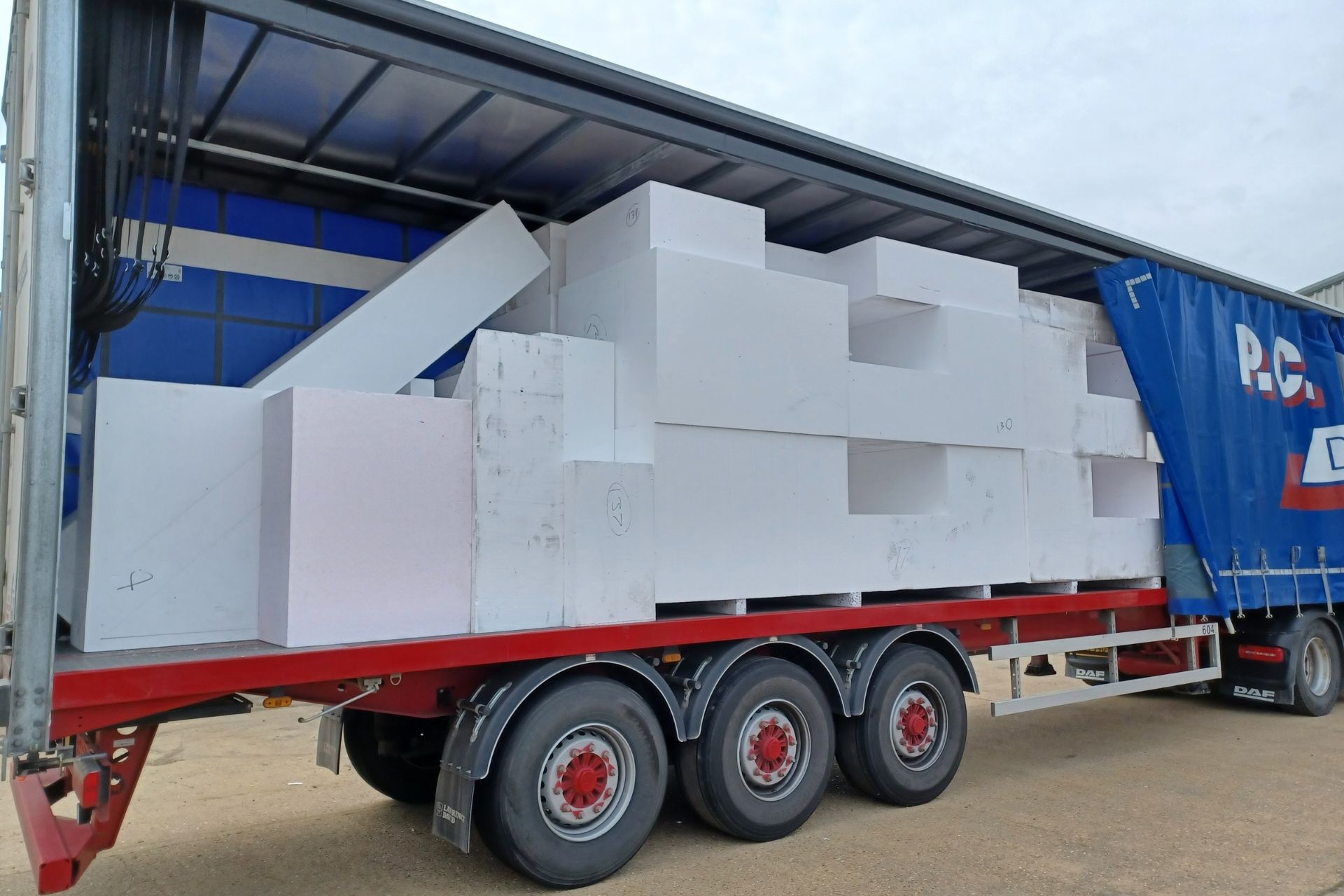
In construction and manufacturing, CNC-milled polystyrene components can be used to create formers, moulds and void fillers for applications such as precast concrete and on-site construction. Accurate geometry is important in these applications, helping to ensure each component performs as intended within the wider production process.
Prototypes and short-run components
CNC milling can also be useful when developing a new component or testing a design before committing to a larger production requirement. Producing a prototype or one-off component gives you the opportunity to check the physical dimensions, fit and overall form before moving into larger-scale production.
Where required, Perudo’s manufacturing process can include prototyping before production.
What materials can be CNC routed and milled?
This article focuses on CNC polystyrene milling, particularly EPS and XPS, but the CNC process itself is not limited to polystyrene.
Perudo also works with a wider range of materials, including insulation boards, wood, plastics, aluminium composite panel (ACP) and composite sandwich panels.
That broader material capability can be useful when a project involves several different components or materials and you want to discuss the manufacturing approach with one partner.
For more information, see Perudo’s CNC routing and cutting service.
When should you choose CNC milling?
CNC polystyrene milling is worth considering when your project involves:
- Complex 3D geometry
- Compound curves and sculptural forms
- Detailed features
- Pockets, channels or rebates
- Repeatable dimensional requirements
- Components that need to fit within a wider assembly
- Prototypes or bespoke components
- Polystyrene designs that cannot be produced effectively using a basic hot wire profile
For a clean EPS or XPS profile that does not require additional machining, hot wire cutting may offer a faster and more economical solution.
For an explanation of how the two processes compare, see What Is Hot Wire Foam Cutting and When Should You Use It and Hot Wire Cutting vs CNC Routing: Which Process Is Right for Your Project.
Working with Perudo on a CNC milling project
A CNC project does not have to begin with you knowing exactly which machining process you need.
At Perudo, we can work from your CAD files, technical drawings, specifications or design concepts to determine how the component can best be produced. The aim is to turn the design into a finished, production-ready part while identifying practical considerations along the way.
The CNC process forms part of our wider manufacturing capability, which includes polystyrene converting and other processing and finishing services. This means the focus can stay on the complete component rather than treating each manufacturing process as a separate requirement.
If you have a complex polystyrene shape, CAD file or technical drawing that needs to become a physical component, speak to our expert team about your project.
A few of
our clients







Read all our News & Insights
-

Hot Wire Cutting vs CNC Routing: Which Process Is Right for Your Project
Polystyrene converting and CNC routing and milling offer different manufacturing advantages, with Perudo helping you select the right process for your project.
-

Foam Glass Insulation: Cutting and Bespoke Sizing Explained
Foam glass insulation can be cut to size, tapered and profiled for roofing, flooring and industrial applications, with bespoke insulation processing from Perudo.
-

CNC Polystyrene Milling Explained: Precision Shapes for Complex Projects
Polystyrene converting and CNC routing and milling offer different manufacturing advantages, with Perudo helping you select the right process for your project.
-

What Is Hot Wire Foam Cutting and When Should You Use It?
Hot wire foam cutting creates precise, repeatable profiles in EPS and XPS polystyrene, offering an efficient solution for construction, packaging, display and insulation projects.